
From Pattern Rooms to Gallery Space: Collingwood’s Industrial Underworld and Cultural Life
How industry and informal economies made Australian Galleries possible in Collingwood

The rooms still followed the logic of the pattern-making business. Long, connected spaces arranged for drafting and movement, their proportions determined by work that required measuring, tracing, and translating design into usable form. When exhibitions began to take place, that arrangement remained. Paintings entered a layout not designed for display, and for a time the two uses coexisted without resolution.
Accounts of the early years of Australian Galleries, including those recorded in Caroline Field’s Australian Galleries: The First Four Decades 1956-1999, describe a space in transition rather than a finished institution. The building was not cleared and remade. Sections were adapted as required. Temporary partitions appeared, surfaces were adjusted, but the underlying structure remained intact.
This was the setting on Derby Street, where the business operated by Tam and Anne Purves began its shift from pattern-making into exhibition. The change did not involve departure. The enterprise remained within its building while altering its function. What had been a site for drafting and constructing patterns for clothing production became a place for exhibiting and circulating art.
Early exhibitions unfolded under these conditions. Works were hung where the building allowed. Circulation followed the existing spatial logic rather than any imposed curatorial sequence. Among the artists shown was Arthur Boyd. His Bride series, later recognised as a defining contribution to Australian postwar painting, entered a space that had not yet acquired institutional certainty. At that point, neither the work nor the gallery carried fixed standing. Both were still in formation, operating in proximity rather than hierarchy.
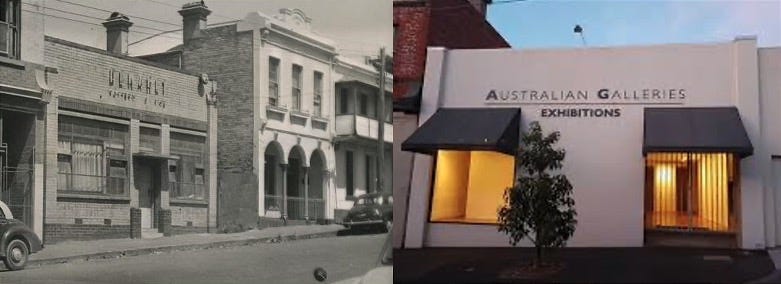
There was no single moment of conversion. The shift occurred through use. Pattern-making ceased to dominate; exhibition took its place within the same rooms. The structure did not change. Its purpose did.
Collingwood had long been defined by work of a different kind. By the late nineteenth century, it had become one of Melbourne’s most densely industrial districts, shaped by proximity to the city, access to labour, and rapid subdivision. Industry did not arrive as a distinct system imposed from outside. It embedded itself into residential streets and expanded through whatever space was available.
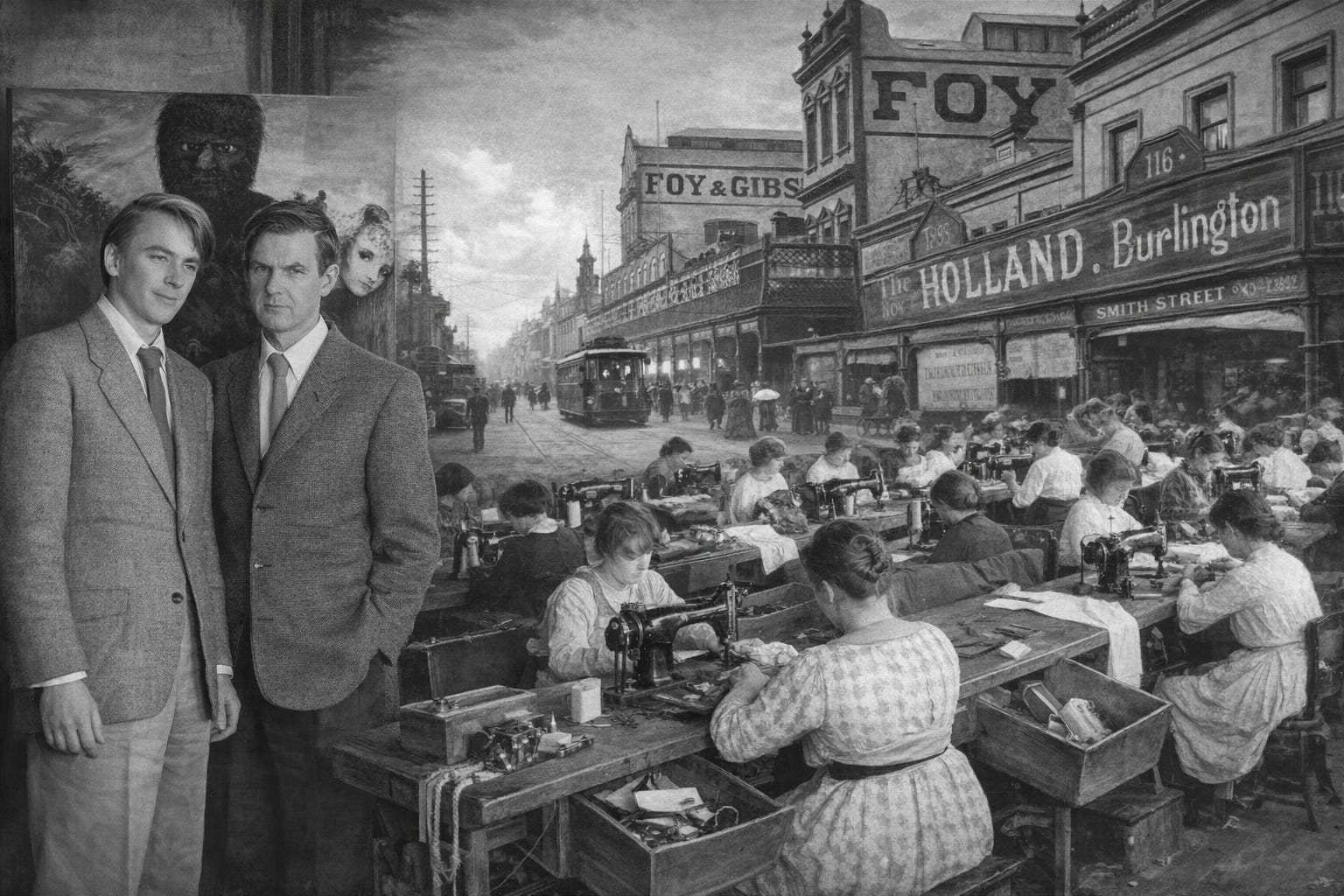
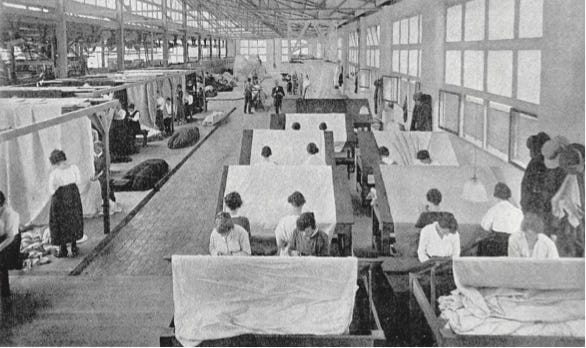
Textile production formed a central part of this economy, supported by associated trades including pattern-making, cutting, finishing, and distribution. These activities were not contained within singular factory complexes alone. They were distributed across multiple scales of production: purpose-built factories, upper-floor workshops, rear extensions, and adapted domestic interiors. Work was continuous, fragmented, and spatially embedded.
The most extensive industrial presence was the Foy & Gibson factory complex. It operated as a network of buildings across multiple city blocks, linking production stages through constant movement of materials and labour. Clothing, furniture, footwear, and household goods were produced at scale for both local and national markets. Thousands of workers passed through the system daily, many living within walking distance of their workplaces.
The suburb was organised around this industrial structure. Streets carried workers between home and factory. Deliveries moved through narrow roads not designed for heavy industrial traffic. Shops and services positioned themselves along these routes, responding directly to the presence of labour. Work and domestic life were not separated. They occupied the same physical ground.
Housing developed under pressure from this density. Terraces were built quickly, subdivided repeatedly, and occupied intensively. Rooms were shared, lodgers taken in, and living arrangements adjusted to unstable or low wages. Privacy was limited and space constantly negotiated. Buildings designed for single households absorbed multiple layers of occupancy.
Boarding houses became a stabilising mechanism within this system. They provided temporary accommodation for workers moving between jobs or arriving from regional Victoria and overseas. Some operated with strict management and routine; others were informal and transient. Their function was not marginal but structural, absorbing the instability of industrial employment.
Pubs formed another central institution within this environment. They operated not only as sites of consumption but as informal infrastructure. Employment was discussed, wages circulated, and trade relationships formed within them. Certain hotels became associated with particular industries or migrant groups, effectively functioning as informal labour exchanges embedded in the geography of the suburb.
Gambling moved through the same network. Card rooms, betting, and informal bookmaking operated in back rooms, upper floors, and shifting locations designed to avoid enforcement. Police attention was inconsistent, shaped more by visibility and complaint than systematic control. Newspaper reporting often oscillated between moral panic and routine acknowledgement, reflecting uncertainty about where social order ended and informal economy began.
Sex work also formed part of this landscape. It was not spatially contained within a designated district but distributed across lodging houses, private rooms, and mixed-use premises within residential streets. Its operation followed the same constraints as other forms of labour: low wages, limited alternatives, and constant negotiation of space and visibility.
These activities were not external to industrial life. They developed within it. The suburb generated multiple forms of work because no single form was sufficient to sustain it.
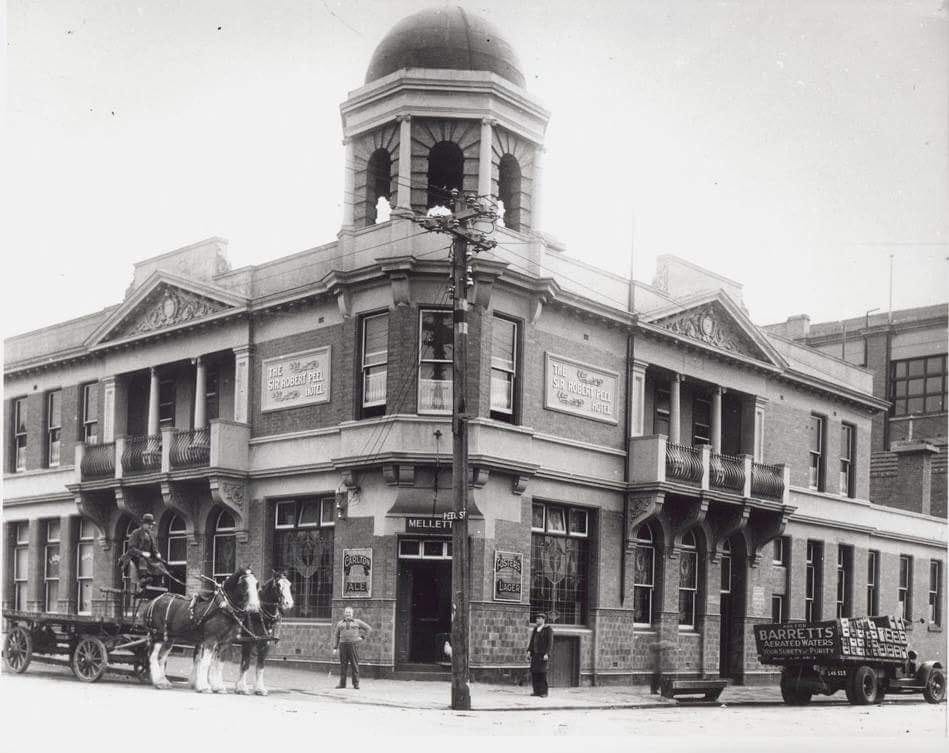
Labour organisation emerged from these conditions. Workers in textile and manufacturing industries engaged in strikes and stoppages that became a regular feature of industrial life in Collingwood. Some disputes remained local, confined to specific factories or employers. Others moved through networks of shared employment, spreading across trades and districts.
Because the suburb was tightly structured, industrial conflict was highly visible. Workers gathered in streets near factories. Meetings took place in halls, unions, and pubs. Movement through the suburb carried information about wages, disputes, and conditions. Employers and workers occupied the same physical environment, even when they stood in opposition to one another. Industrial relations were not abstract; they were embedded in daily movement through space.
By the mid-twentieth century, around 1956, the suburb remained industrial but was beginning to shift. Smith Street continued to operate as a dense commercial strip of shops, workshops, and small manufacturing businesses. Butchers, tailors, second-hand dealers, and repair trades occupied buildings that had been repeatedly modified to accommodate changing uses. Interiors were layered with adaptation rather than replacement.
Large industrial operations, including Foy & Gibson, continued but no longer defined expansion. Manufacturing was beginning to move toward outer suburbs where larger sites, road access, and new infrastructure allowed more efficient production. The transition was uneven. Some factories closed, others reduced operations, and many continued in diminished form for years.
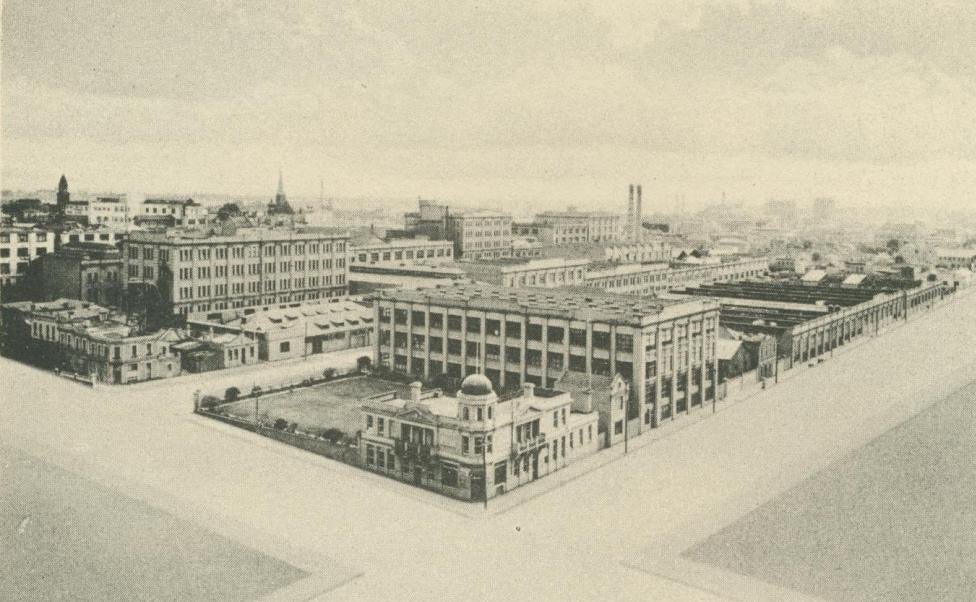
Housing remained structurally consistent. Terraces continued to dominate the built environment, heavily occupied and frequently subdivided. After the Second World War, migrants from Greece, Italy, and other parts of Europe settled in the area. Many entered factory labour, construction, and small business. Their presence reshaped the cultural life of the suburb without altering its physical form. New cafés, grocery stores, and workshops emerged within existing structures.
Daily life continued to follow the rhythms of labour. Early mornings, shift changes, and evening gatherings structured movement through the suburb. Even as industrial stability weakened, its temporal order remained visible in how the streets functioned.
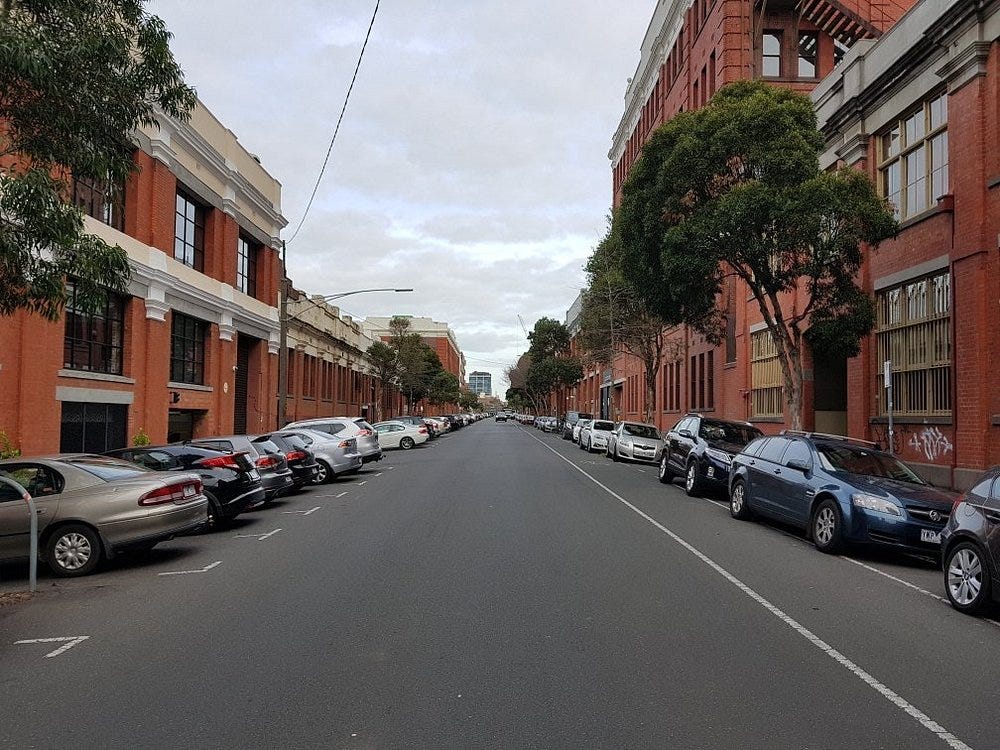
The decline of manufacturing in the later twentieth century left behind a substantial built environment. Factories, warehouses, and workshops remained in place, often too substantial to demolish and too adaptable to abandon. Their scale, materials, and layout made them suitable for reuse rather than removal.
New forms of occupation emerged gradually. Storage, light industry, artist studios, and cultural institutions moved into these buildings in an uneven process driven by availability and cost rather than coordinated planning. The transformation was incremental, occurring building by building.
On Derby Street, the building that had housed pattern-making under Tam and Anne Purves became Australian Galleries, which developed into a significant presence in postwar Australian art. Artists exhibited in rooms that retained the proportions and circulation of their original use. The gallery did not begin as a neutral interior designed for display. It emerged from a working environment, and traces of that origin shaped how art was encountered within it.
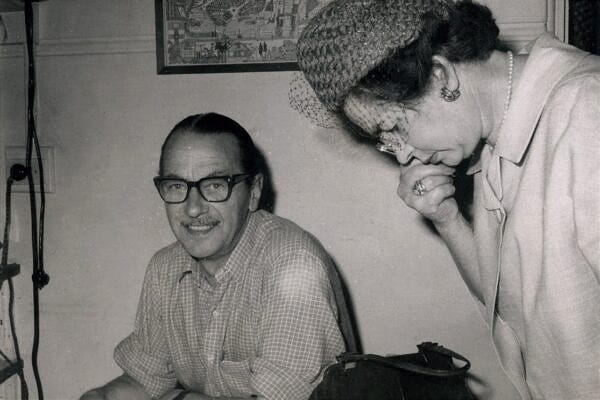
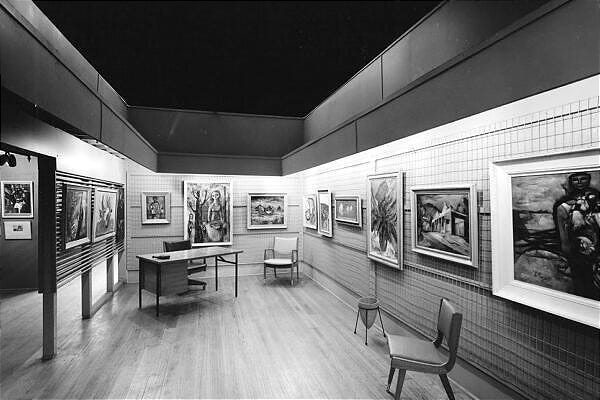
The presence of Arthur Boyd’s work within this setting underscores the proximity between industrial conditions and cultural production in mid-century Melbourne. His Bride series entered rooms still marked by labour, before either the work or the institution had been stabilised by critical recognition or institutional framing.
Collingwood does not divide cleanly into historical stages. Industrial production, working-class housing, migration, informal economies, and cultural activity occupy the same ground. Each leaves traces that persist in the built environment. Buildings retain structural logic even as use changes. Streets preserve patterns of movement established through decades of labour.
Derby Street provides a precise example of this continuity. Its significance lies not in prominence but in what it reveals about adaptation. The building that once housed pattern-making became a gallery without leaving its site and without erasing the spatial logic that defined it.
The tendency in later accounts is to treat places like Collingwood as if they were transformed by culture, as though galleries and studios arrived to replace industry and remake the suburb. That interpretation misreads the sequence. Cultural activity did not enter an emptied landscape. It entered spaces formed by labour and depended upon them.
The more accurate reading is less dramatic but more exact. Collingwood did not move from industry to culture. It remained a place organised around work. What changed was not the presence of production, but its form and its valuation.
The rooms on Derby Street did not stop producing when patterns gave way to paintings. They continued to produce, but the output shifted — from material goods to cultural meaning, from garments and patterns to visibility, reputation, and artistic value.
The decision by Tam and Anne Purves now appears, in hindsight, as prescient. At the time, it was uncertain and exposed to doubt. A gallery focused on Australian artists, established in a working industrial suburb rather than a recognised cultural district, did not conform to prevailing expectations about where art belonged.
They did not transform Collingwood. They worked within what it already was, and in doing so revealed that its industrial conditions were not a limitation on cultural production, but one of its enabling structures.
That is the point most accounts miss. Collingwood was never remade into a cultural district. It remained a place defined by work. What changed was what counted as work — and who had the authority to name it.
Andrew McIlroy is an Australian artist and writer