

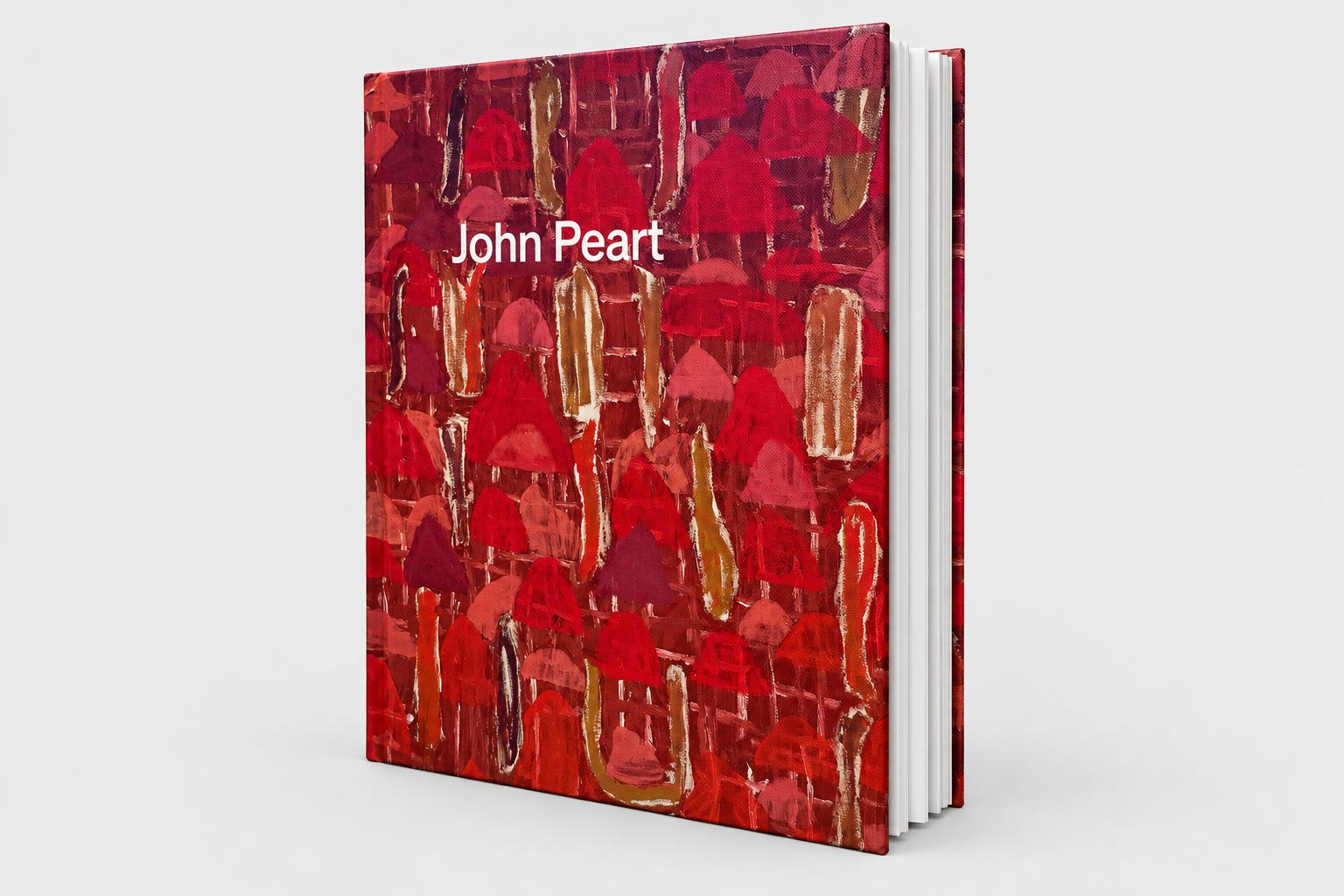
John Peart’s paintings changed so considerably throughout his career that even those familiar with his art may find surprises in the new monograph John Peart, edited by Sioux Garside (2026). Beautifully illustrated and exceptionally well researched, the book also reminds us that an artist’s reputation is no substitute for examining the paintings. The book brings together contributions by Sioux Garside, Anne Ryan, Quentin Sprague, Chris Saines CNZM and Virginia Milson, alongside Joe Frost’s 2011 interview with Peart.*
John Peart, edited by Sioux Garside. Sydney: King Street Studios, 2026. Hardcover, 268 pages, extensively illustrated. RRP A$80. Available from King Street Gallery on William.
★★★★★
Occasionally, John Peart cut up his own paintings and assembled new ones from the pieces. He evidently had little sentimental attachment to what he had already painted. Anne Ryan examines this practice in her contribution to the new Peart monograph, supplying insights into his methods that no reproduction of a finished painting could provide.
The monograph was published by King Street Studios Pty Ltd in 2026 to accompany Unfolding Time, an exhibition at King Street Gallery on William in Sydney, with a further launch at Charles Nodrum Gallery in Melbourne. Peart died in 2013, and Watters Gallery, which represented him for much of his career, has since closed.
Peart had established his reputation remarkably early. At twenty-three, he was among the youngest artists included in the National Gallery of Victoria’s celebrated exhibition The Field in 1968. Awards, overseas travel and a distinguished exhibition history followed. Yet the geometric abstraction that first brought him recognition was only the beginning. In the years that followed, he produced paintings that frequently bore little resemblance to those made only a few years earlier.
That range gives the monograph much of its interest. The book was some six years in the making. It includes essays by Garside, Quentin Sprague and Ryan, a foreword by Chris Saines CNZM, personal recollections from Virginia Milson and Joe Frost’s 2011 interview with Peart. Its extensive illustrations bring together paintings from across Peart’s career, including examples rarely seen together.
What makes the scholarship particularly rewarding is the attention given to how Peart actually painted. Garside and Ryan examine his materials and methods, while Frost’s interview allows us to consider their findings alongside the artist’s own account. The paintings changed dramatically in appearance, but the book reveals more continuity in Peart’s working habits than those changes might suggest.
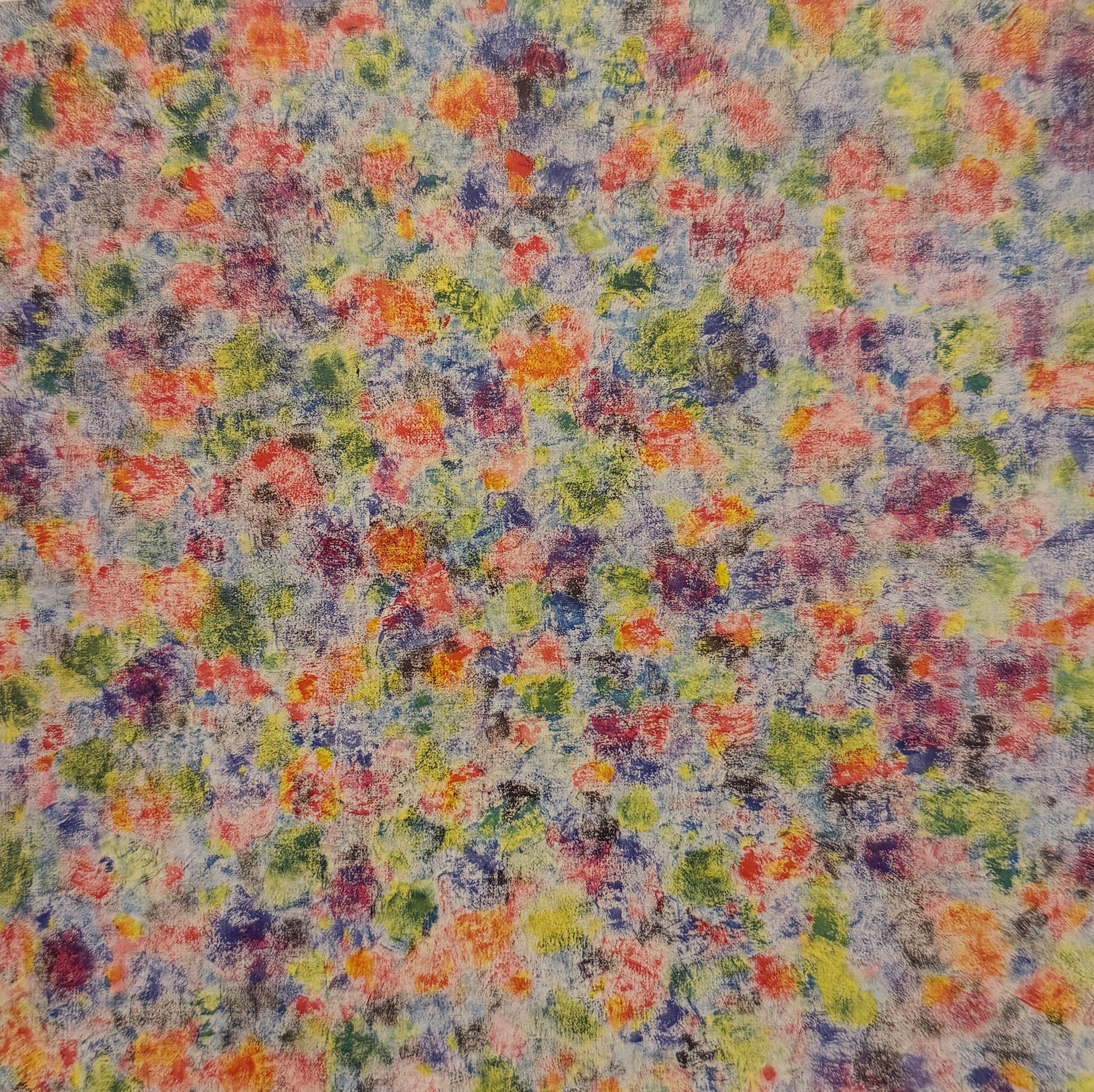
In her essay Unfolding Time, Garside examines Peart’s working practices, including his habit of reusing discarded materials. He described using square panels as palettes, putting them aside when the paint on them interested him and returning to them later. There is a world of difference between allowing paint to behave unpredictably and knowing what to do when it does.
Ryan examines Peart’s drawing, collage and printmaking, considering the part these played in the development of his painting. Rather than treating them as subsidiary activities, she examines their relationship to his paintings and the decisions involved in making them.
Peart’s experiments with collage are especially instructive. Once removed from its original arrangement, a painted fragment retains its colour, marks and physical character, but its relationship with everything surrounding it changes. By rearranging fragments, Peart could reconsider an entire composition without sacrificing individual passages of paint that interested him.
The procedure also tells us something about his understanding of composition. An attractive passage of painting was not necessarily worth preserving simply because it had been successfully executed. If its relationship with the rest of the picture proved unsatisfactory, Peart was apparently prepared to dismantle the lot.
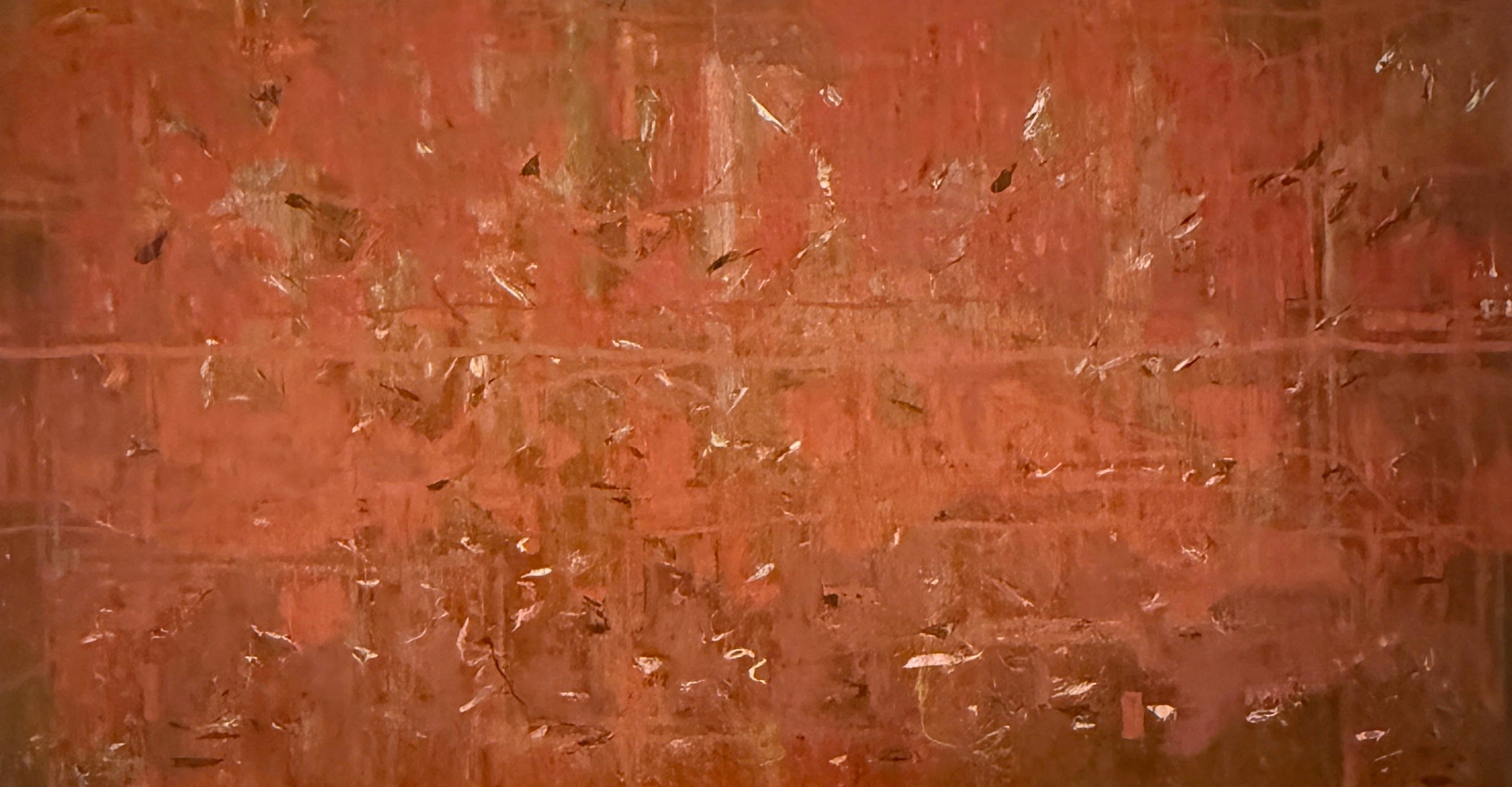
Frost’s interview is particularly enjoyable in this context. Painters can become rather tiresome when explaining what their pictures mean, but Peart is considerably more informative when discussing what he actually did. His observations about deliberately introducing unfamiliar elements and beginning without a predetermined result suggest a painter perfectly willing to inconvenience himself.
Having achieved recognition unusually early, Peart might easily have spent the remainder of his career producing recognisable variations upon an established style. There were undoubtedly collectors who would have welcomed precisely that. Yet his distinction between a successful painting and one that conforms to accepted standards suggests he was more interested in what he might accomplish next.
Such intentions are easy enough to express. The paintings must supply the evidence, and the book contains an extraordinary variety of them.
Ravenna (1971), an enormous canvas dominated by yellow, black and magenta, has little in common with the disciplined geometry associated with Peart’s earliest success. Its broad expanses of colour suggest considerable freedom in the handling of paint, although the arrangement of its principal forms is anything but arbitrary.
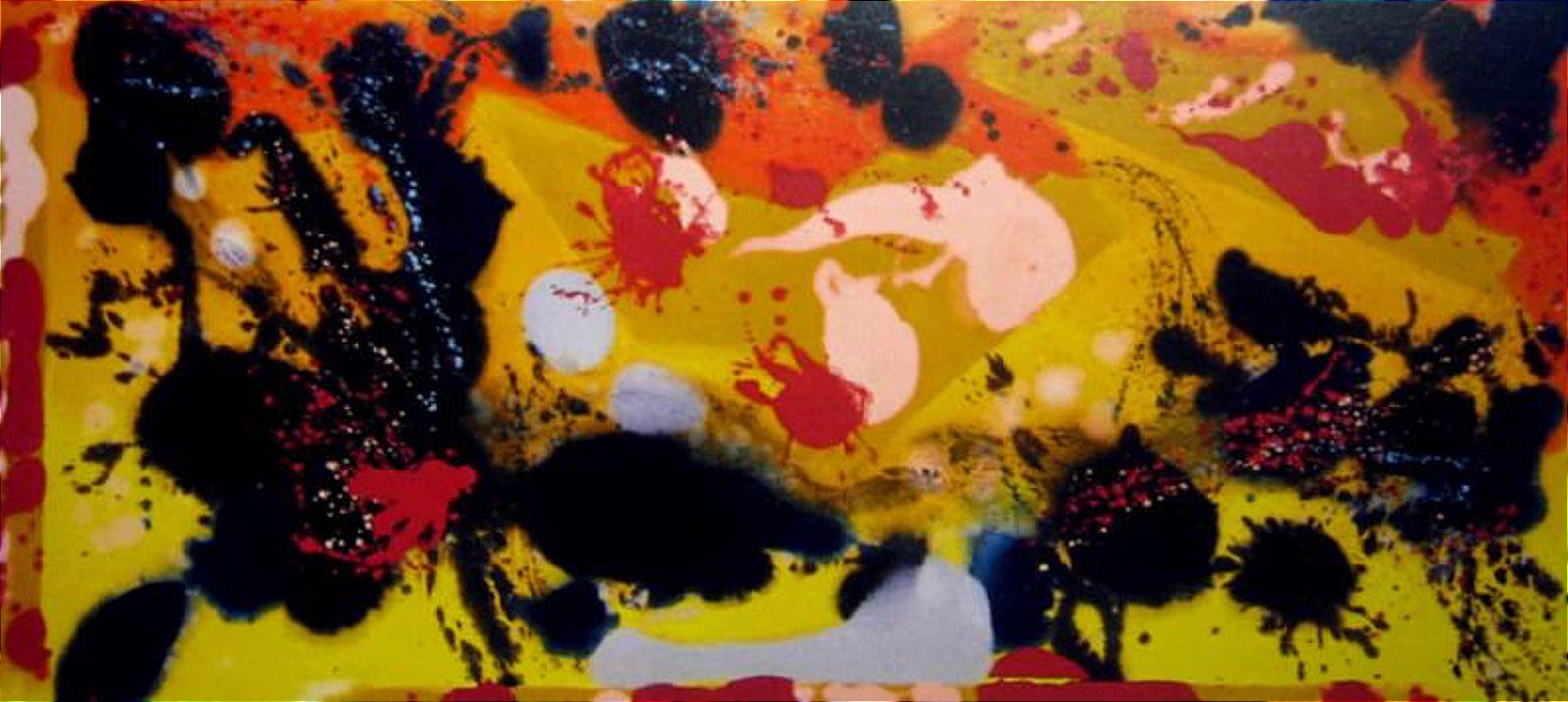
Only a few years later, Grand Pink (1973) and Golden (1973–74) present more complicated arrangements of transparent washes and scattered marks. Their differences from Ravenna are considerable, yet the three paintings belong to a relatively brief period of Peart’s career. Garside examines their construction without attempting to make every change another chapter in a conventional history of stylistic development.
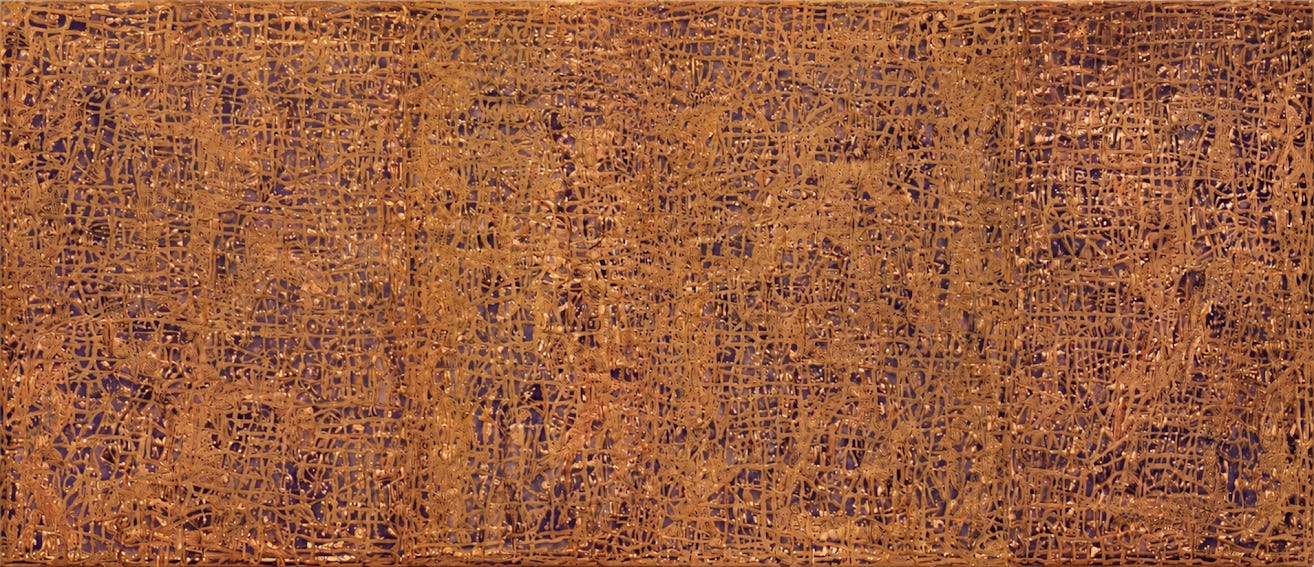
By 1985, Peart was producing paintings as elaborate as Neelima II, an enormous four-part composition measuring more than six metres across. It contains an intricate network of intersecting marks and colours. Individual passages vary in density and character, yet the composition is carefully organised across its immense dimensions. Across four panels, Peart has to sustain those relationships over more than six metres without allowing the painting to break into four separate pictures.
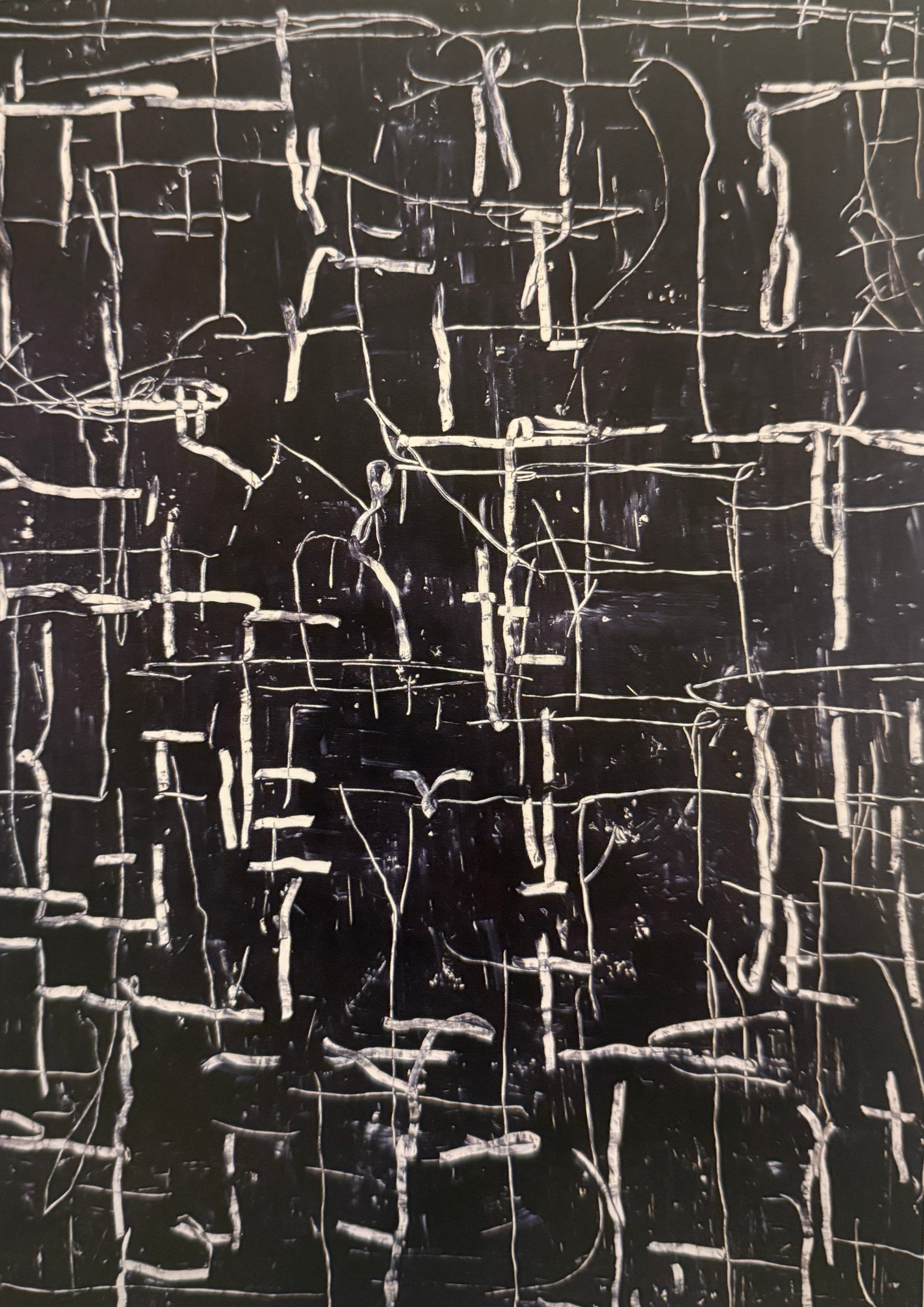
A decade later, Black to white (1995) employs an almost entirely restricted palette, with emphatic white lines crossing a black surface. The marks vary in thickness, direction and intensity. Their arrangement suggests an underlying structure, although the individual lines resist anything approaching mechanical regularity.
Drawing was hardly a subsidiary activity in Peart’s painting. The distinction between drawing and painting becomes considerably less useful when examining pictures in which marks are fundamental to the construction of the painted surface.
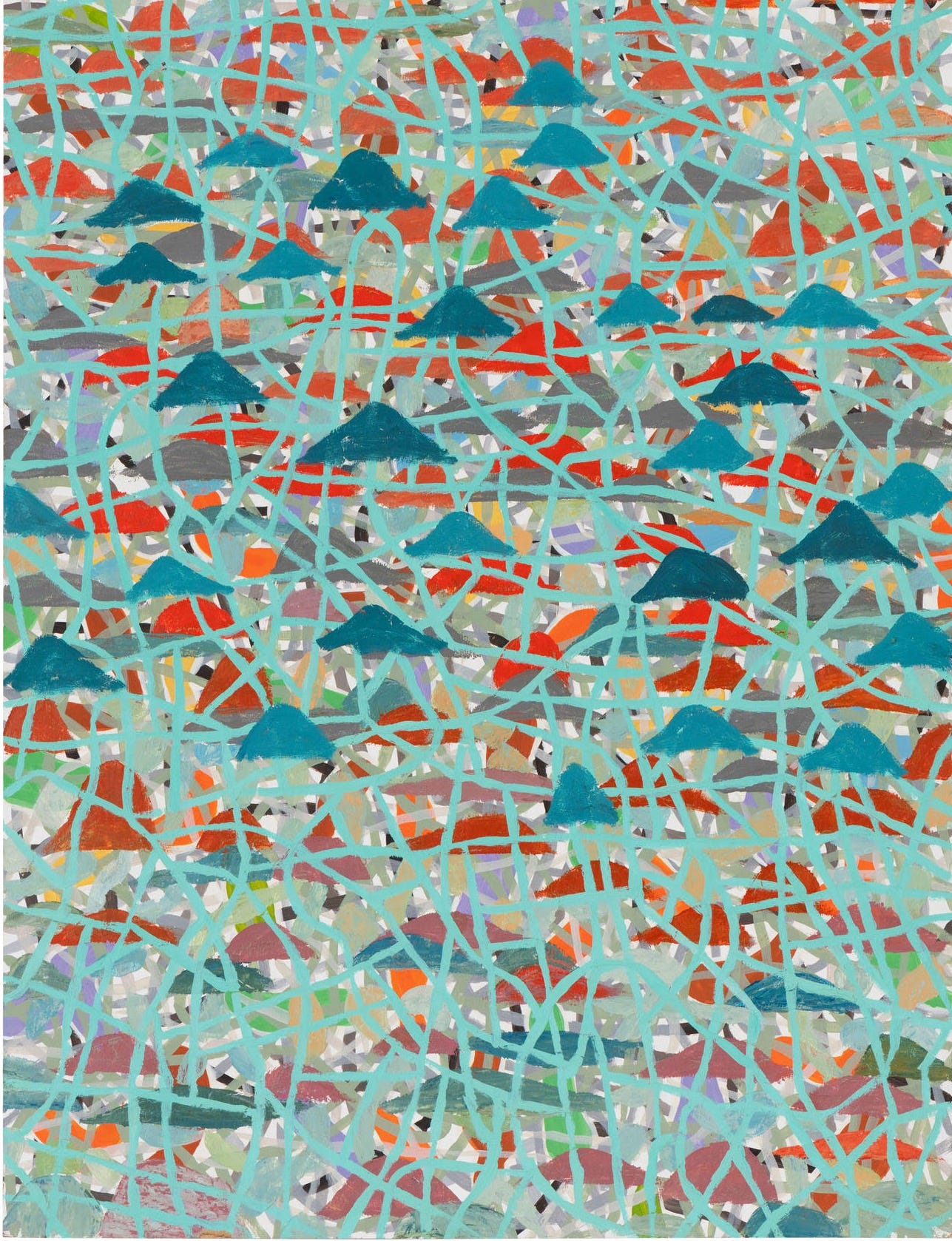
His later Thicketish paintings are different again. Their crowded surfaces contain overlapping colours and elaborate networks of lines, sometimes organised into smaller passages of quite different character. Despite their complexity, the individual elements remain part of a carefully considered composition.
Peart’s artistic interests extended well beyond Australia. Malevich, McCahon, Pollock and several other modernists figure in the essays, but it is his admiration for Ian Fairweather that I find particularly interesting. Peart recalled Fairweather as the first Australian painter whose art had genuinely moved him.
Their treatment of drawing and densely painted surfaces certainly invites comparison. In Fairweather’s paintings, drawing frequently provides the underlying structure even when partially obscured by successive applications of paint. Peart’s overlapping lines and colours suggest an artistic sympathy, although their paintings and circumstances were markedly different. Such comparisons are useful when they direct our attention towards particular pictures. An impressive collection of artistic influences explains very little in itself.
Music, meditation and spiritual experience also receive considerable scholarly treatment. These were genuine interests of Peart’s, although interpreting their influence upon individual paintings is a more demanding exercise. Abstract painting has attracted more than its share of musical analogies, and the familiar vocabulary of rhythm, harmony and repetition can become a substitute for examining how a picture is constructed.
Garside’s discussion of Black to white, for example, identifies something of the character of graffiti in its emphatic white marks. The comparison is immediately comprehensible, although the apparently casual lines belong to a carefully organised composition. I find such observations more informative than attempts to explain individual paintings principally through Peart’s intellectual interests. His interests deserve scholarly investigation, but their relationship to the paintings requires more than biographical evidence.
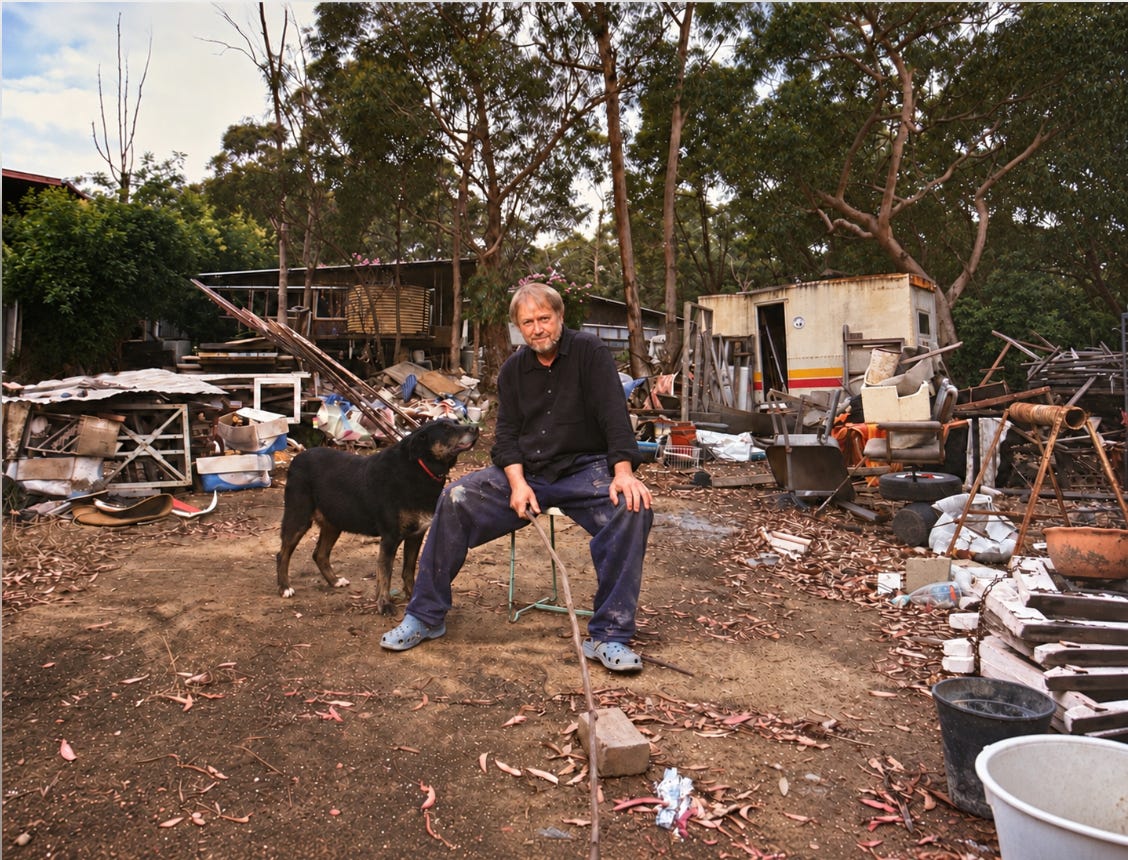
Quentin Sprague’s The Indirect Subject: John Peart in Place examines Peart’s relationship with Wedderburn, where he lived and painted for many years. His account of the artist’s windowless studio is a detail worth remembering when confronted by explanations of Australian abstraction that depend too heavily upon the surrounding landscape. An artist living among trees is not necessarily painting them.
Sprague also considers Peart’s interest in meditation and its relationship to the physical activity of painting in his discussion of Mantra Moment. Peart’s own observations provide valuable evidence, although precisely how meditation affected the paintings is less easily established.
Wedderburn was also home to a remarkable community of artists, including Elisabeth Cummings, Roy Jackson, Joan Brassil and Fred Braat. Their friendships and shared circumstances formed an important part of Peart’s life, although their individual practices differed sufficiently to discourage any convenient notion of a Wedderburn school. Sprague recognises the historical importance of these associations without confusing geographical proximity with artistic similarity.
One of the editorial merits of the publication is that these subjects can be examined without every contributor rehearsing the same biography. Garside and Ryan attend closely to Peart’s methods, Sprague considers place and the intellectual interests surrounding the work, while Frost allows Peart to describe his own practice. The personal recollections add another kind of evidence. There is occasional overlap, but scarcely enough to diminish the usefulness of the individual contributions.
Then there is the physical book, which is a pleasure in its own right. Peart’s paintings present formidable difficulties for reproduction, ranging from enormous canvases to delicate washes and intricate linear constructions. The illustrations have been given generous space, and the detailed photographic and production credits acknowledge the considerable effort involved.
Particularly impressive is the selection of paintings from different periods, including examples that might otherwise be unfamiliar even to readers who know Peart’s career. The reproductions accommodate enormous variations in colour and technique. A painting such as Neelima II inevitably loses much of its physical presence when reduced to book dimensions, but the reproduction allows us to examine its intricate construction and compare it with paintings produced decades earlier.
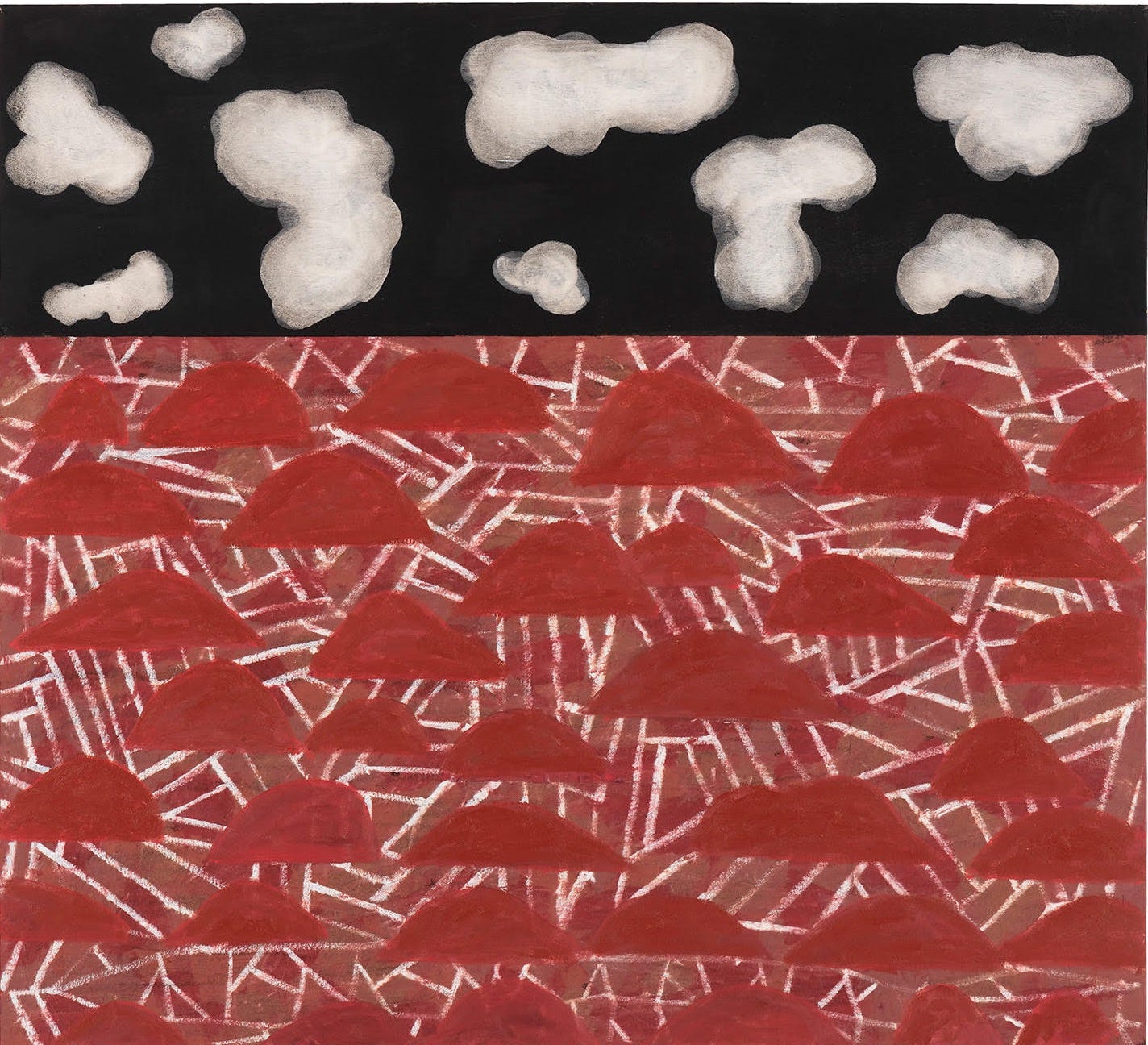
There remains an important place for the substantial artist monograph. Unlike an exhibition catalogue, it need not confine itself to the paintings assembled for a particular occasion. It can draw upon distant collections, incorporate research that would otherwise remain scattered and provide a visual account extending across an entire career. In Peart’s case, these advantages are particularly valuable. But elaborate production alone is no guarantee of scholarship. The finished book must justify the investment.
Following the closure of Watters Gallery, the Peart Estate is represented by King Street Gallery on William in Sydney and Charles Nodrum Gallery in Melbourne. Both have substantial histories of supporting Australian painting. Their association with Peart is appropriate, and this publication demonstrates what commercial galleries can accomplish when their accumulated knowledge, access to collections and publishing resources are put to good use.
The danger with an artist monograph is that admiration becomes its organising principle. Everything the artist did is retrospectively justified, every influence becomes significant, and the most ordinary biographical circumstances acquire an importance they may never have possessed. The result may be beautifully illustrated and impeccably produced, but the scholarship can amount to little more than an elaborate endorsement.
The contributors have avoided that trap. Their research into Peart’s materials and methods is exceptionally thorough, while his intellectual and spiritual interests receive equally careful consideration. The illustrations are magnificent. The book considerably enlarges our understanding of Peart, but its greatest service is to send us back to the paintings. There is a great deal more to see than his established reputation might suggest.
*King Street Gallery on William supplied my review copy of the monograph. The opinions are entirely my own.
Andrew McIlroy is an Australian artist who writes about art, artists and the culture around them.
I always enjoy your postings and learn much from them - I’m in the UK and have only a very broad understanding of Australian art, so most of your posts open up new horizons for me. I don’t know quite why but this particular account struck me very forcefully. If only the postage wasn’t so expensive I might have been able to stretch to a copy of that magnificent-looking monograph! Thank you so much for your work.
Beautifully reviewed, thank you Andrew